
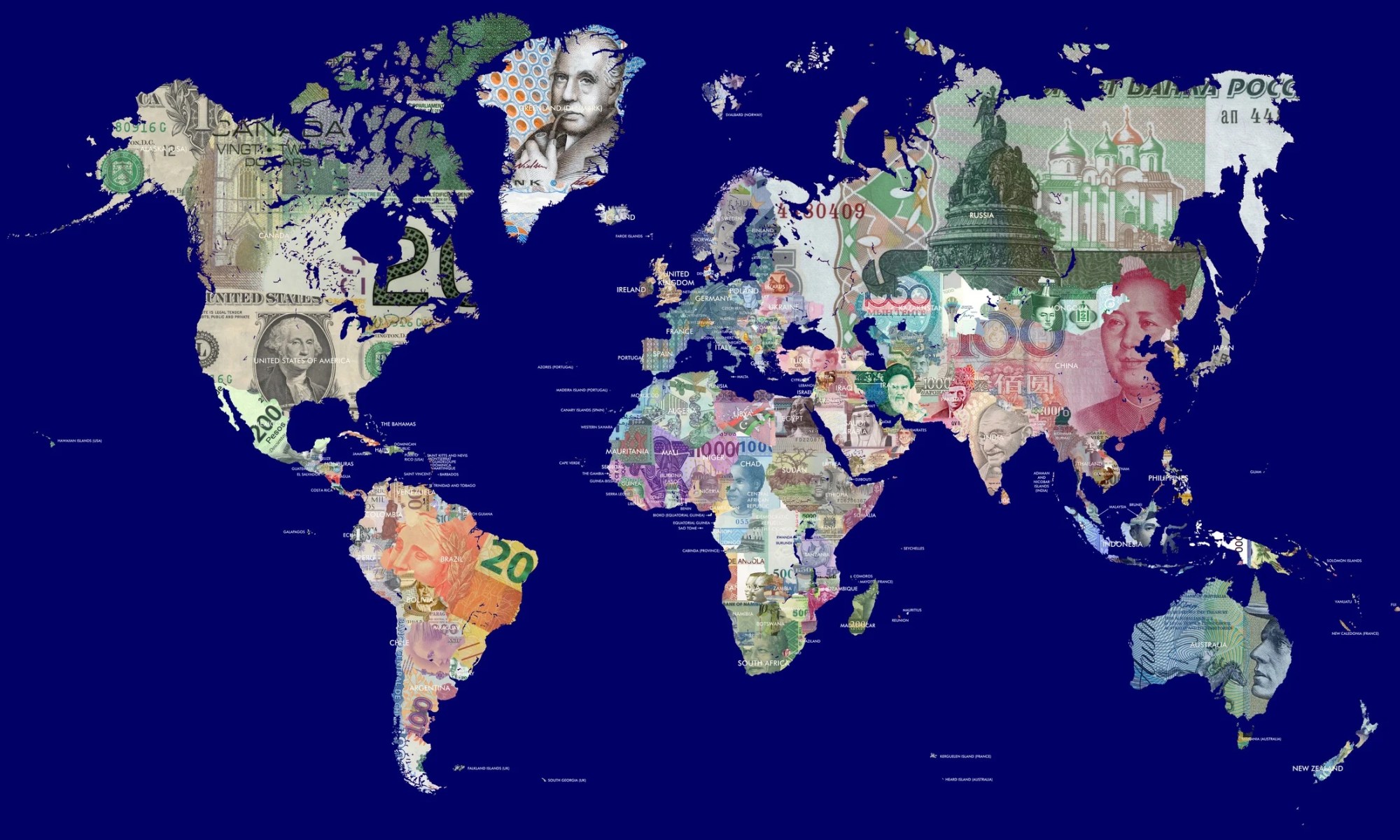

The international economy has witnessed an increased relevancy of multinational corporations to further efforts at global cooperation following World War II; “[b]efore World War II, most MNCs were in manufacturing—like General Motors, Ford, Siemens, Nestlé, and Bayer, among others,” (Mingst & McKibben, p. 263). The utility of multinational corporations has since expanded throughout the 1990s, increasing to “about 60,000 MNCs,” (Mingst & McKibben, p. 263).
The contending perspectives on international political economy (IPE) are Economic Liberalism, Mercantilism/Economic Nationalism, and Economic Radicalism. The best framework to observe the role of multinational corporations in the international community today is Mercantilism/Economic Nationalism/Neomercantilism. Under this framework, the international economy presupposes an anarchic international system, thereby focusing on exports rather than imports enforcing the economic security of the state and the morale of the citizenry, (Mingst & McKibben, p. 261). Black’s Law Dictionary defines the term Mercantile as “[o]f,relating to, or involving merchants or trading; commercial,” (Garner, B., p. 1182).
Arthur Seldon (1916–2005) defined Mercantilism as “the economic philosophy of merchants and statesman during the sixteenth and seventeenth centuries . . . the “commercial revolution” of this period . . . Mercantilist doctrine centred on the power of the state, which it was designedto strengthen,” (Seldon, A., p. 436). Seldon added that “[b]y the second half of the eighteenth century mercantilist policies were being increasingly regarded as a hindrance to economic progress,” (Seldon, A., p. 437).
Thus, economic nationalism, or neomercantilism, is a modern revision to the mercantilist approach; focused on economic national security. Arthur Seldon defines Economic Nationalism “the policy of self-sufficiency bolstered by tariffs, quotas, currency restrictions, and other means of excluding imports, (Seldon, A., p. 213).
Mercantilism supports the perspective that “the international system [is] a competition for power among states,” a platform whereby “economic policies should be subservient to the national interest,” (Mingst & McKibben, p. 259). But this needn’t require government intervention, nor coercive foreign policy action. Instead, greater economic incentivization must to be granted to MNC that focus their manufacturing domestically. Outsourcing labor to foreign nations results in the “degradation of and uncertainty about product quality,” (Miller, R.; Benjamin, D.; North, D., p. 40). Worse, it is destructive for America’s national security.
Multinational Globalization
Any nation that relies upon multinational corporations (MNC) will face the Prisoner’s Dillemma, whereby nations “cannot arrange a binding agreement among themselves because they cannot control the others’ decisions, (Seldon, A., p. 518). Many great American companies have changed the quality or content of their products to comply with foreign governments. Johnathan W. Whitaker, Peter Ekman, and Steven M. Thompson of Richmond University write that “globalization is an important vehicle for MNCs to manage revenue growth and cost reduction,” (Whitaker, J.W.; Ekman, P.; Thompson, S.M.; Richmond). But the growth of MNC pose a distinct threat to American industry workers, the quality of the ingredients of medical products, the utilization of hazardous substances in the manufacturing process,orblantant villation ofhuman rights under the pretext of foreign government.
Thus, “[g]lobalization provides opportunities for revenue growth by expanding operations into new geographical areas, and opportunities to reduce costs and increase profitability through economies of scale and scope” (Whitaker, J.W.; Ekman, P.; Thompson, S.M.; Richmond). Yet a further reach requires compromise, whether by a reduction in product quality or reduction in manufacturing cost.
Globalization poses a risk to U.S. national security when it involves sensitive datasets; many of these MNCs include private intellectual property. Moreover, they lessen reliance on domestic manufacturing; equating to the removal of millions of jobs. Further, the increase reliance on foreign nations, as companies build manufacturing facilities in their nations.
The Richmond research team cites “strategic opportunities” and foster global inclusivity, thereby “acquir[ing] inputs from multiple locations and serv[ing] diverse markets,” (Whitaker, J.W.; Ekman, P.; Thompson, S.M.; Richmond). Global inclusivity equates to corporate foreign aid, thereby weakening the domestic economy.
Alvaro Cuervo-Cazurra, Marlene Dielemen, Paul Hirsch, Suzana B. Rodrigues, and Stelios Zyglidopoulos (written henceforth as “Cuervo-Cazurra, et al.”) of Northeastern University write that “[t]he harms caused by multinationals’ misconduct affect not only the company’s own employees but also the local communities and stakeholders,” (Cuervo-Cazurra, A., et al.; Northeastern). Cuervo-Cazurra, et al. add that “corruption, cronyism, and anti-dumping practices can harm the public by exacerbating social inequalities and depriving governments of the revenue needed for public services,” (Cuervo-Cazurra, A., et al.; Northeastern).
Whitaker, Ekman, and Thompson of Richmond predict that “[a]mong the 30 companies in the Dow Jones Industrial Average, the 10 that get the largest share of their sales abroad were expected to see revenues grow by an average of 8.3%, and the 10 that do the least business outside the U.S. were expected to show much lower average revenue gains of 1.6%,” (Whitaker, J.W.; Ekman, P.; Thompson, S.M.; Richmond).
Domestically Headquartered Multinational Corporations
Multinational corporations headquartered in the U.S. are Exxon, Chevron, Apple, Google, McDonalds, Amazon, DocuSign, and Starbucks. Multinational corporations headquartered in foreign nations include Toyota, Honda, Subaru, Mitsubishi, Toshiba, Ibanez (Japan); Adidas, Mercedes Benz, (Germany); NesCafé, Rolex, Strandberg, (Switzerland); IKEA.These institutions show that multinational corporations are important for international relations. Today, “[t]hey account for 50 percent of worldwide trade and constitute up to 40 percent of the value of the stock markets in the West,” (Mingst & McKibben, p. 263).
Shockingly, “[j]ust 10 percent of these MNCs generate 80 percent of all global profits, and they own the lion’s share of intellectual property,” (Mingst & McKibben, p. 263). Mingst & McKibben write that “[i]n 2020, of the largest 500 corporations, one-third were based in one of five major cities—Beijing, Tokyo, Paris, New York, and London,” (Mingst & McKibben, p. 263). Specifically, “China is the home of 124 of the largest MNCs, up from 3 in 1995, while the United States is the home base for 121 of the largest companies,” (Mingst & McKibben, p. 263).
Natural Order of International Anarchy
The natural state of world order forces nations to prepare for imminent threats to national security. The security dilemma plays an important role in ensuring that the system used in influencing domestic and international economic policy is dynamic.
King Louis XIV’s advisor Jean-Baptiste Colbert (1619–83), held that “states needed to accumulate gold and silver to guarantee power,” (Mingst & McKibben, p. 259). Applying this framework in contemporary U.S. foreign policy, “[a] strong central government [is] needed for efficient tax collection and maximization of exports, both geared toward guaranteeing military prowess,” (Mingst & McKibben, p. 259).
Therefore, institutions like the Bretton Woods System, can be utilized the stabilize and enrich America’s economy, and bolster its national defense. However, negligence—the belief that other foreign leaders and their appointed delegates are inherently good natured—will erode the nation’s exceptionalism on the world stage. American mustn’t rely on the Bretton Woods System; a multinational corporate system that was established to forge “a system of economic order and international cooperation,” (WorldBank). It’s original goal was that it “would help countries recover from the devastation of the war and foster long-term global growth,” (WorldBank).
The detriment of the Liberal framework can be seen in the Bretton Woods Institutions, whereby bureaucratic centralized entities that operate outside of the U.S. Constitution. These institutions include the World Bank, the International Monetary Fund (IMF), and the General Agreement on Tariffs and Trade (GATT). The U.S. Federal Reserve writes that “[t]hose at Bretton Woods envisioned an international monetary system that would ensure exchange rate stability, prevent competitive devaluations, and promote economic growth,” (FederalReserveHistory).
Robert E. Scott and Zane Mokhiber of the Economic Policy Institute write that “it has cost the U.S. millions of jobs throughout the economy since China entered the World Trade Organization (WTO) in 2001, a finding validated by numerous studies,” (Scott, R.; Mokhiber, Z.; EPI). Richard Wilson, of the American Federations of Teachers’ Education Healthcare Public Services, wrote in 2007 that “[j]ust 14 months after the legislation passed, China did become a member of the WTO, and its goods now enter with lower tariffs,” (Wilson, R.; AFT).
Many American corporations that began as national landmarks of prosperity, have eroded into international forces of detriment. Many Americans have become reliant on low-cost alternatives for many name brand products. Wal-Mart represents one of these multinational corporations that has negatively impacted America’s economic national security. What began in 1962 in Rogers, AK; became the first publicly shared company in 1970 at $16.50 per share, and expanded to Mexico City in 1991; resulting in the establishment of its own international division in 1993 and its expansion to China in 1996, (Wilson, R.; AFT; Walmart). Since this shift, Wal-Mart’s manufacturing has shifted from domestic to foreign.
Richard Wilson, adds that “Wal-Mart exemplifies a major shift in the balance of economic power, with manufacturers getting weaker and retailers getting stronger,” (Wilson, R.; AFT). Wilson charges that “Wal-Mart drives away good jobs—and in so doing, creates a new crop of low-income families who must shop at Wal-Mart in order to stretch every dollar,” (Wilson, R.; AFT). Scripture warns against conforming to the patterns of other nations and cultures, despite having an awareness of objective truth; for God is always renewing our minds; by faith He grants us provision, (Rom 12:2).
Multinational corporations (MNCs) duties include, “investing in foreign countries, importing and exporting goods and services, negotiating licenses in foreign markets, and opening facilities abroad,” (Mingst & McKibben, p. 263). The 730 delegates at Bretton Woods agreed to establish two new institutions to (1) “monitor exchange rates and lend reserve currencies to nations;” (2) “[economically develop] less developed countries,” (FederalReserveHistory).
The Detriment of Multinational Corporations (MNC)
Historically, “the United States’ first secretary of the treasury, Alexander Hamilton (1757–1804), advocated protectionism—policies designed to restrict imports from other countries,” (Mingst & McKibben, p. 259). James Madison wrote in the Federalist Paper No. 53 that “[t]he great theatre of the United States presents a very different scene. The laws are so far from being uniform, that they vary in every state;” (Madison, J., p. 279). Madisonadded that “whilst the public affairs of the union are spread throughout a very extensive region, and are extremely diversified by the local affairs connected with them,” (Madison, J., p. 279). Thus, Madison concluded that the diversity of the states “can with difficulty be correctly learnt in any other place, than in the central councils, to which a knowledge of them will be brought by the representatives of every part of the empire,” (Madison, J., p. 279).
Multinational corporations (MNC) undermine the representation of Americans through the acquiescing of domestic values to reflect tolerable conditions in foreign nations. Many of these institutions violate the core principles of America’s Founding Fathers, at the behest of its private owners. Apple’s manufacturing company, Foxconn notes that newer models result in “speedups, compulsory overtime, increased safety and health hazards, heightened tensions in supervisor-worker relations, and even outbreaks of violence on the factory floor,” (Chan, J.; Selden M.; Pun, N., p. 183). The managerial response to Foxconn incidents are delegated to “local governments, the trade unions, and police officers [that] suppress workers’ strikes and protests,” (Chan, J.; Selden M.; Pun, N., p. 183). Therefore, MNCs veil inhumane conditions that may occur, in favor of corporate enrichment.
Multinational corporations must compromise American values to effectively operate. Although multinational corporations may benefit a developing nation by bringing jobs to its residents, does not mean that it will benefit America, its national security, or civic interests.
Jesus reminds us that our morals cannot be compromised under any circumstances. Man cannot be devoted to God and his moral obligations and be simultaneously willing to compromise his values for self-interest of personal enrichment, (Matthew 6:24; ESV).
International frameworks pose a grave threat to any nation’s autonomy as,
Conclusion
Multinational corporations pose an imminent threat to the national security and long term values and traditions of any sovereign nation. Mercantilism is the clearest framework to establish a comprehensive understanding of the role of multinational corporations in the international community today.
Bibliography
Chan, Jenny; Selden, Mark; Pun, Ngai. Dying for an iPhone: Apple, Foxconn, and The Lives of China’s Workers. (Function).
FederalReserveHistory. (Accessed on April 23rd, 2025). Creation of the Bretton Woods System. https://www.federalreservehistory.org/essays/bretton-woods-created
Hamilton, A.; Madison, J.; Jay, J. The Federalist: The Gideon Edition.
IMF. (Accessed on April 23rd, 2025). Articles of Agreement. https://www.imf.org/external/pubs/ft/aa/pdf/aa.pdf
Miller, R. L. (2017). The Economics of Public Issues, 20th Edition. [VitalSource Bookshelf 10.3.1]. Retrieved from vbk://9780134532035
Scott, R.; Mokhiber, Z.; EPI. (Accessed on April 23rd,2025). Growing China Trade Deficit Cost 3.7 Million American jobs Between 2001 and 2018 Jobs lost in Every U.S. State and Congressional District. https://www.epi.org/publication/growing-china-trade-deficits-costs-us-jobs/
Seldon, A., (1965, 2005). Everyman’s Dictionary of Economics – The Collected Works of Arthur Seldon: Volume 3. Liberty Fund.
Walmart. (Accessed on April 24th, 2025). History. Walmart. https://corporate.walmart.com/about/history
Whitaker, J.; Ekman, P.; Thompson, S. (2017). “How Multinational Corporations Use Information Technology to Manage Global Operations.” Journal of Computer Information Systems, 57, no. 2, 112-122, DOI: 10.1080/08874417.2016.1183426
Wilson, R.; AFT. (Accessed on April 23rd,2025). How Wal-Mart Is (Mis)Shaping the Global Economy Share on Facebook Share on X Share with Emailhttps://www.aft.org/ae/spring2007/wilson#:~:text=As%20with%20China’s%20entry%20into,time%20without%20paying%20any%20tariffs.
WorldBank. (Accessed on April 23rd, 2025). Bretton Woods and the Birth of the World Bank. https://www.worldbank.org/en/archive/history/exhibits/Bretton-Woods-and-the-Birth-of-the-World-Bank
 Jordan Muhsin