
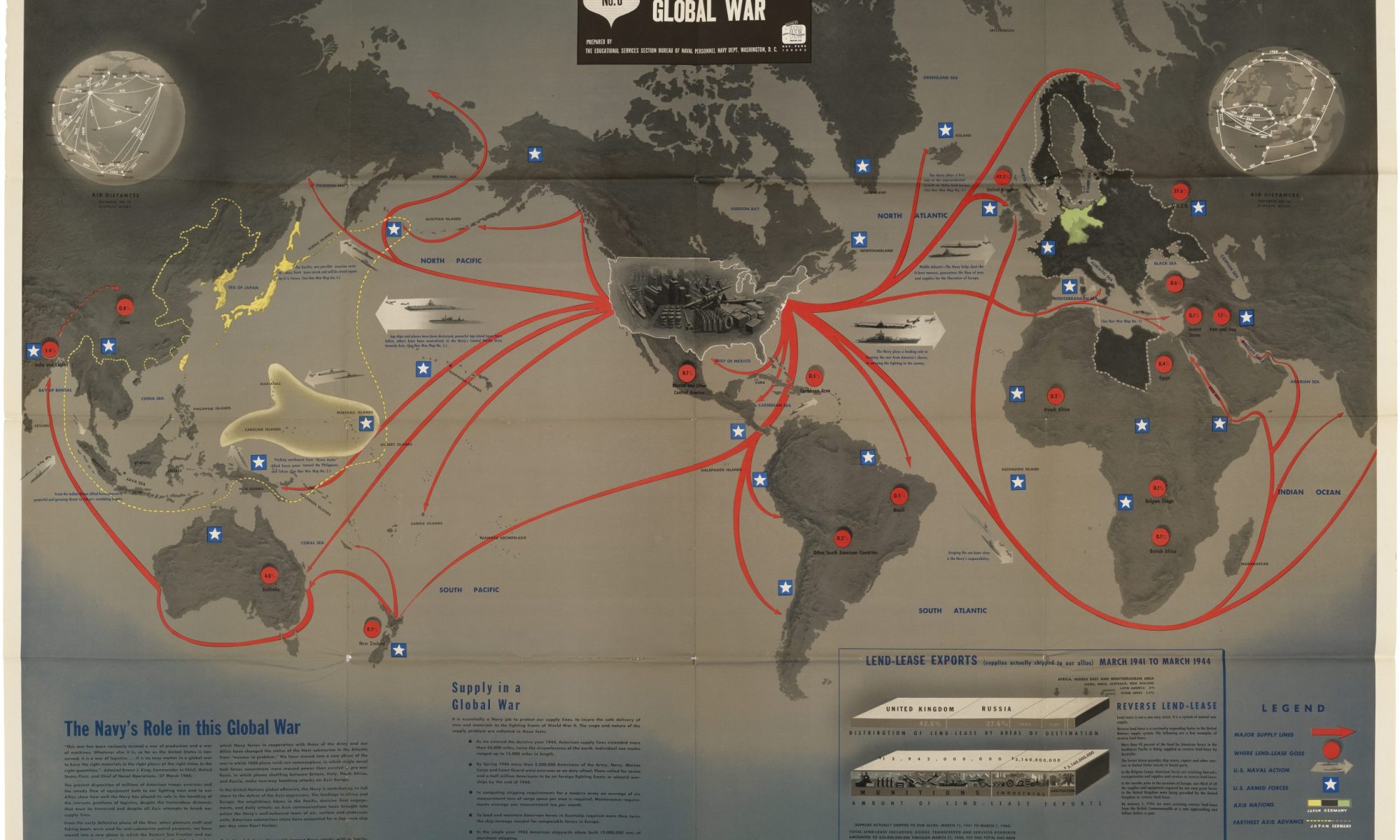

The contemporary state of international politics has established a foundation of conflict; a trend likely to increase in the international arena over the next two decades. Global cooperation and universal consensus are unlikely to ensue, without implementing the use of force. Mingst and McKibben cite that “[o]ne of the most common contending claims over which violence breaks out between states involves contested territory,” (Mingst & McKibben, p. 195).
Moreover, “[o]ur conception of what poses a threat to national security has clearly expanded beyond just the threat of war,” (Mingst & McKibben, p. 177). Any threat to a country’s national security has the potential to facilitate war. Thus, “[t]he range of actions states need to take to protect themselves has necessarily expanded as well,” (Mingst & McKibben, p. 177).
As Kenneth Waltz remarked, “[t]he evilness of men, or their improper behavior, leads to war;” (Waltz, K., p. 39). Man is born as fallen, thus must actively work from a state of depravity to build order and form purpose, (Gen 6:5,6). History reminds us that all have sinned and fallen short of God, no matter their worldly position of influence of authority, (Rom 3:23).
The Existential Threat of Perpetual War
Further, America has yet to face existential threats our national security beyond what has been experienced. America has just begun to face the threats of satellite technology, cyberwarfare, and biological attacks that produce significant threats to its posterity.
Terrorism presents a persistent threat to any sovereign state. Cyber terrorism and “cyberwarfare [have] become increasingly common in state relations;” thereby presenting a contemporary omnidirectional threat U.S. national security. Moreover, space exploration and planetary colonization is bound to impose even greater conflict between nations.
Lastly, the decline of global resources has resulted in greater tensions between nations. On February 2023, the United Nations Security Council reported that the investigations into the explosion of the Nord Stream pipelines established that there was “extensive damage to Nord Stream 1 and 2 and that the damage was caused by powerful explosions due to sabotage,” (UN).
These instances are one of the many incurrences nations should expect and prepare for in the coming decades.
Conflict Cannot be Eliminated
Conflict is inevitable. Conflict between nations may be mitigated, but it cannot eliminated. Historically, “war is a natural, inevitable feature of interstate politics,” thus, national security remains an essential domestic priority for all nations, (Mingst & McKibben, p. 195). To mitigate inevitable conflict, bipolar relations are essential.
Yet fundamentally, the differences in worldviews will succumb to conflict should the use of force threaten any nation’s independence. Accordingly, Mearsheimer cites that “the American military has been at war for roughly two out of every three years since 1989 . . . against minor powers, (Mearsheimer, J., p. 9).
Warfare Is Natural
History shows that war cannot be prevented: “[i]n the past 3,400 years, the world has been entirely at peace for only 268 of them,” (Mingst & McKibben, p. 179). By these metrics it is clear that peace is a temporary state, one that presupposes an inevitable impeding conflict. Global authority requires national subjugation, and the erosion of diverse culture and tradition.
Rather than striving to prevent war, nations must strengthen their own national military defense while simultaneously working towards autarky. Any nation that believes the age of warfare has come to an end negates the inception of new evils.
Since 2005, there has been a vast increase in the number of cyberattacks resulting in compromised data, whereby billions of individuals have fallen victim to data compromise, (Statista).
In December 2023, “Israeli-linked hackers disrupted approximately 70% of gas stations in Iran;” revealing the potential cyberwarfare tactics that can be delegated to radical political extremists and other underground organizations to inflict damage on foreign competition, (CSIS).
Minimum Security is Essential
A nation must always consider its minimum level of security. Without this, no nation can be resiliently autonomous; “[a]ll other human values that are crucially important to the quality of our lives—good government, economic development, a healthy environment—presuppose a minimum level of physical security,” (Mingst & McKibben, p. 179).
Despite data that reveals a decline in the intensity of warfare conducted since the World Wars and the Korean War; the number of countries experiencing death from internal conflict has risen over the past decade, (Mingst & McKibben, p. 179). Further, “the Global Peace Index . . . shows that by 2020 the global level of peace had deteriorated by 2.5 percent since 2008,” (Mingst & McKibben, p. 179).
While these statistics are disturbing, they support the strongest nations amassing nuclear weapons and weapons of mass destruction. Bipolar relations will allow for the assurance of security in non-nuclear states, entrusting the hegemons within the anarchic international system to conduct bipolar relations. Therefore, a nuclear state imposes obligation of hegemonic nations to preclude an escalation of war’s intensity, thereby preserving its own existence.
Hegemonic nations have the tendency to expand their territories with the expansion of their industry and population. Thus, war is likely to occur over contesting territory. Moreover, hegemonic expansion requires the reduction in the power of opposing hegemons.
While diplomacy, national independence, and the freedom to conduct bipolar relations absent from collective oversight offers a temporary gesture towards the rejection of war, it does not negate it. Any state of foreign policy will inevitably result in war; the difference is in the intensity and immediacy of interstate conflict.
The Case Against Perpetual Peace
Liberal and constructionist frameworks negate the prospect for sovereign independence without collective intervention or internationalization of norms. Two theories fall short of a viable path to peace, or any productive benevolent endeavor. Both Democratic Peace Theory and Commercial Peace Theory involve illogical prospects of an illusory utopia—and cannot be globally achieved within the physical state of reality.
Democratic Peace Theory
The Democratic Peace Theory fallaciously believes that “democratic states do not fight wars against each other but do fight wars against authoritarian states;” nations throughout the international system hold extremely different definitions of Democracy. The prospect of any nation attain democracy is an opportunity for its foreign competition to equivocate its meaning.
North Korea declares itself to be the “Democratic People’s Republic of Korea;” China’s Mao Zedong declared his state to be a “Democratic Dictatorship;” Cambodia’s Pol Pot named his dictatorship, “Democratic Kampucheal,” (Halsall, P.; Fordham). None of these are remotely democratic.
Further instances of differential definitions include former president Bill Clinton’s proclamation that, “[t]he promotion of democracy abroad is one of the primary foreign policy objectives of my Administration,” (State). Clinton’s definitive view of democracy was contingent on cultural compliance and hegemonic expansion.
Former president Joe Biden declared that “American democracy asks the hardest of things: to believe that we’re part of something bigger than ourselves. So, democracy begins with each of us.” (WhiteHouse). Joe Biden’s verbal contortions reject logic, in that his version of democracy beings with us submitting our independence to something greater. In all of these instances, liberal democracy equates to the illusory pursuit of glory.
Commercial Peace Theory
Another fallacy is Commercial Peace Theory, or “a theory that states that are interdependent through trade and investment are less likely to go to war; conflict is too economically costly,” (Mingst & McKibben, p. 219). But the pursuit of global democracy through economic interdependence is not pursuant to virtue.
Nor will economic interdependence negate the inherent primal instincts of any foreign leader pushed to provide for his citizens. Nor does any form of interdependence incentivize sovereign autonomy or the preservation of any cultural tradition.
Economic interdependence is not economic independence; despite their phonetic similarities, they hold very different meanings. Economic interdependence requires collective cohesion and relies on coercion.
Independence over Dependency
Conversely, abandoning collective interdependence, and instead focusing on bipolar relations foster economic independence is less likely to result in war. But economic independence is not an assurance against global warfare.
Machiavelli indicated “[i]f everything is considered carefully, it will be found that something that looks like virtue, if followed, would be his ruin; whilst something else, which looks like vice, yet followed brings him security and prosperity,” (Machiavelli, N., p. 119). Here, Machiavelli’s theory can be applied to the debate of economic interdependence.
Liberals believe that an independent national agenda to be unvirtuous, thus depict nationalism to be a malevolent state. But any state of coercive force is maleficent.
Nations forced together through a collective agenda will not stop the inevitable conflict of cultural differences and the propensity for the expansion of government. Instead, virtue must be produced through independence—a nation cannot gain virtue by association.
Interdependence Opposes Nature
Fundamentally, the world began with one language, (Gen 11:1); yet the union of their cohesion was not bound by God. Instead, self-righteousness drove the world to become gods themselves, by creating a tower to the heavens, (Gen 11:4).
Scripture depicts that a total union without Christ is not only impossible, but against the will of God, (Gen 11:8,9). Further, Revelation describes the final stages of Earth; depicting that unbelievers still exist (Rev 3:9).
Hegemonic nations may choose to support conflicting nations to better equip their own economy. For this reason, it is likely that conflict will ensue between smaller nations to compete for trade with hegemons. Hegemonic nations are more likely to facilitate war within smaller nations to control the power of its domestic factions, thereby sustaining its authority and assuring the sustainability of its resources.
Machiavelli warned, “it is not as easy to keep peace among those who assisted you and those you have crushed, (Machiavelli, N., p. 58). Thus, foreign war is likely to ensue in any circumstance, despite the innocuous intentions any nation may possess in remaining prosperous.
Conclusion
In sum, conflict is inevitable, and can be mitigated, but cannot be prevented. Hegemonic expansion requires the abdication, or extermination of opposing hegemons. Conflicting systems of beliefs between world leaders are likely to result in conflict.
The development of satellite technology, cyberwarfare, and biological attacks, foreign policymakers must take necessary steps to preclude the inevitable natural force of war. History shows that any nation will resort to violence if threatened by collective, but bipolar relations will preserve a state’s autonomy, thereby reducing reliance on multipolar interdependence.
Bibliography
CSIS. (Accessed on April 21st, 2025). Significant Cyber Incidents. Strategic Technologies Program. CSIS. https://www.csis.org/programs/strategic-technologies-program/significant-cyber-incidents.
Halsall, P.; Fordham. (Accessed on April 16th, 2025). Modern History Sourcebook: Mao Zedong: The People’s Democratic Dictatorship. https://origin.web.fordham.edu/halsall/mod/1949mao.asp
Machiavelli, N.; Horowitz, M. (1532). The Prince (Original Classic Edition). G&D Publishing.
Mearsheimer, J.J. (2014). The Tragedy of Great Power Politics (Updated Edition). (Function). Kindle Edition.
Mingst, K.A.; McKibben, H.E. (2021). Essentials of International Relations, 9th Edition. [VitalSource Bookshelf 10.3.1]. Retrieved from vbk://9780393872033
State. (Accessed on April 16th, 2025). Support for a Democratic Transition in Cuba: Report to the Congress. https://1997-2001.state.gov/regions/wha/helmbu.html#preface
Statista. (Accessed on April 21st, 2025). Number of Data Breaches and Victims U.S. 2024. Statista. https://www.statista.com/statistics/273550/data-breaches-recorded-in-the-united-states-by-number-of-breaches-and-records-exposed/.
UN. (Accessed on April 21st,2025). Letter Dated 21 February 2023 from the Permanent Representatives of Denmark, Germany and Sweden to the United Nations addressed to the President of the Security Council. https://documents.un.org/doc/undoc/gen/n23/054/69/pdf/n2305469.pdf
Waltz, K. (1954, 1959, 2001). Man, the State, and War: A Theoretical Analysis. (Function). Kindle Edition.
WhiteHouse. (Accessed on April 16th, 2025). Remarks by President Biden on Democracy and Freedom. https://bidenwhitehouse.archives.gov/briefing-room/speeches-remarks/2024/06/07/remarks-by-president-biden-on-democracy-and-freedom-normandy-france/
 Jordan Muhsin